
Access to capital & funding
Companies pursue capital for different reasons, from strengthening operations and investing in equipment to expanding facilities, entering new markets and commercializing new ideas.
South Carolina’s capital landscape includes public and private lenders, investors, grant programs, incentives and organizations that help businesses evaluate their options. The appropriate path depends on the company, the opportunity and the intended use of funds.

Start with the business objective
Defining the intended outcome can help narrow the types of capital and resources most relevant to your business.
Launch or establish operations
New and early-stage businesses may need capital for facilities, equipment, inventory, staffing, product development or other initial operating expenses.
Strengthen current operations
Existing businesses may seek working capital, equipment financing or other resources to improve efficiency, increase production or respond to changing operational needs.
Expand capacity
Facility expansion, new equipment, additional jobs and infrastructure improvements may involve a combination of financing, investment and eligible economic development incentives.
Scale innovation and market reach
High-growth companies may pursue capital for research, commercialization, technology development or expansion into domestic and international markets.
Navigate the capital landscape
Different sources of capital carry different requirements, obligations and measures of success.
Debt financing
Banks, community lenders and other financing organizations may provide loans or lines of credit based on factors such as cash flow, credit, collateral, repayment capacity and intended use.
Grants & cost-sharing programs
Grant opportunities are generally competitive and limited to defined applicants, activities or outcomes. Some programs require matching funds or reimbursement of approved expenses.
Equity investment
Businesses with significant growth potential may pursue investment capital in exchange for an ownership interest. Investors typically evaluate the company’s leadership, market opportunity, scalability and potential return.
Incentives & tax credits
Eligible businesses may qualify for incentives or tax credits tied to activities such as capital investment, job creation, workforce development or expansion. These programs may offset qualifying costs but generally do not function as traditional operating capital.

Position your business for funding
Capital providers and program administrators evaluate opportunities differently. Businesses should be prepared to clearly communicate:
- The amount and timing of the capital needed
- How the funds will be used
- The business or project outcomes the investment will advance
- Current financial performance and future projections
- The company’s ownership, leadership and operating structure
- Available collateral, matching funds or other financial commitments when applicable
- The proposed approach to repayment, growth or return on investment
The specific documentation required will depend on the funding pathway and provider.
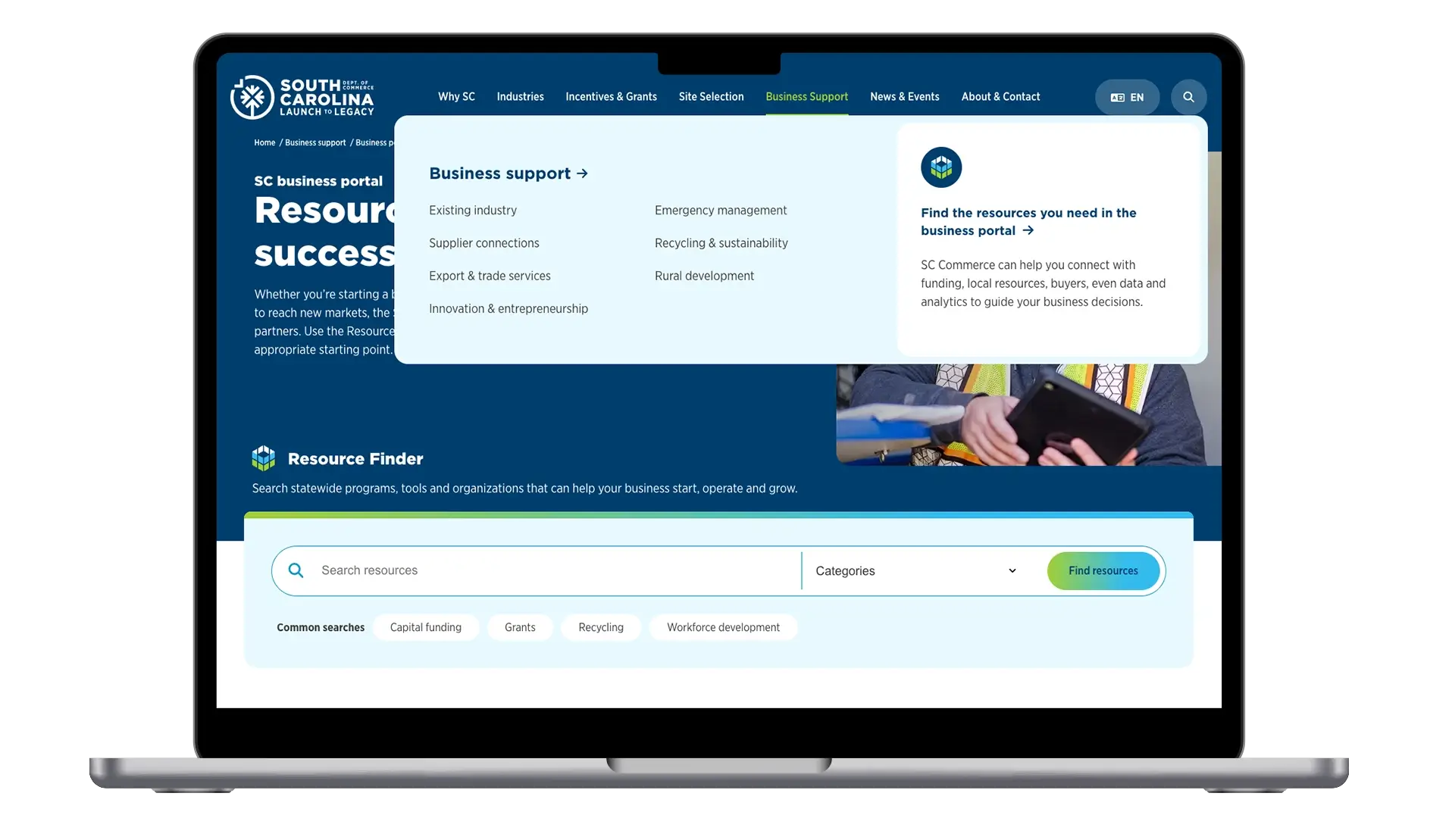
Find capital and funding resources
Search statewide resources serving businesses at different stages of development and growth. Availability, eligibility and application requirements vary by provider.

Need help narrowing the field?
Share what your business is working toward and SC Commerce can help identify relevant resources and organizations.

