
Infrastructure & logistics in South Carolina
Getting products to market efficiently matters. South Carolina combines a strategic East Coast location with the infrastructure businesses need to reach customers, suppliers and markets around the world. Situated between New York City and Miami, the state is within a two-day drive of nearly 208 million Americans, including every major East Coast market as well as Detroit, Chicago and Dallas. From ports and rail to highways, airports, utilities and broadband, South Carolina keeps business connected and products moving.

South Carolina’s connected advantage

Connections that keep business moving
SC's highway network connects businesses to major markets across the Southeast and beyond. Five interstate highways, including I-95, I-85 and I-26, provide direct north-south and east-west access, supported by more than 41,000 miles of state-maintained highways. We are committed to keeping those connections strong. More than $1 billion has been invested in roads, bridges and transportation operations during the 2026 fiscal year. Combined with a mild climate that minimizes weather-related disruptions, South Carolina helps keep freight moving year-round.
The utilities advantage
South Carolina is a powerhouse when it comes to abundant, competitively priced and reliable utilities. Energy costs in South Carolina are approximately 26% lower than the national average. The state’s diverse mix of private and public energy sources — hydroelectric, nuclear, coal, natural gas and other renewable resources — stand ready to meet the needs of the world-class companies that choose to invest here.

A leader in nuclear power
Nuclear makes up 56% of the state’s total electricity supply, making South Carolina one of the nation’s leaders in nuclear power generation.
Advanced energy ecosystem
SC NEXUS, the nation’s first federally designated Regional Technology and Innovation Hub to span an entire state, connects 300+ companies with research and public partners to advance energy technologies.
Other helpful resources
Dominion Energy
Duke Energy
Power SC
South Carolina Energy Office
Global access starts at SC ports
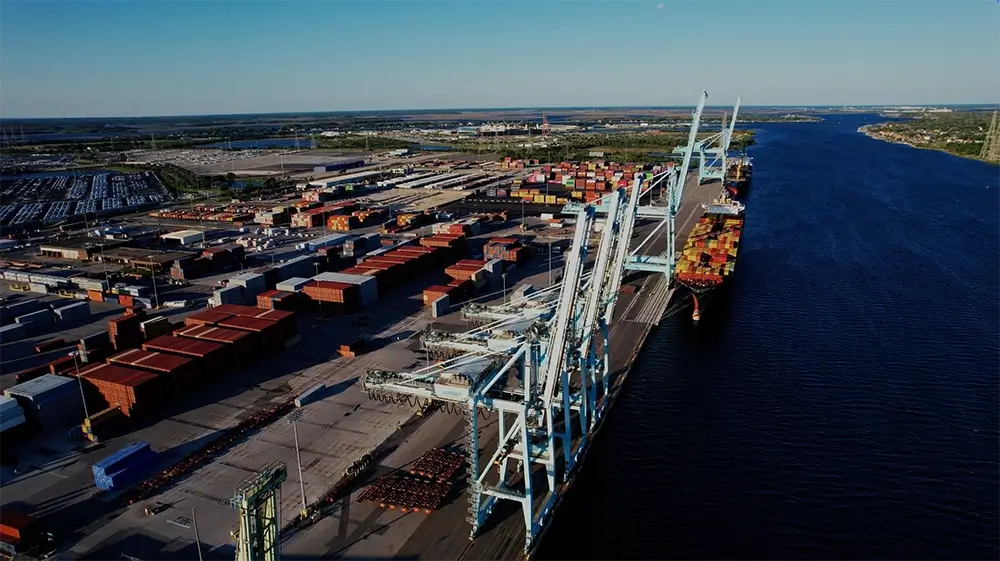
The Port of Charleston offers companies efficient access to markets around the world. With the deepest harbor on the US East Coast, modern terminals and direct connections to major rail and highway networks, SC Ports helps companies move goods quickly and reliably through the global supply chain.

Port of Charleston
With a 52-foot harbor and high-clearance bridges, the Port of Charleston can accommodate some of the world’s largest container ships without tidal restrictions. Its proximity to open sea, modern cargo-handling capabilities and connections to inland transportation networks help reduce transit time and keep freight moving.
Inland port connections
Inland Port Greer and Inland Port Dillon extend the reach of South Carolina’s port system through rail-connected facilities serving inland markets. These facilities help companies reduce highway miles, strengthen supply chains and connect operations across the Southeast with global commerce.
New Leatherman Terminal
The state-of-the-art Hugh K. Leatherman Terminal expands SC Ports’ ability to serve growing cargo volumes in the Southeast. At full buildout, the three-berth terminal is planned to add 2.4 million TEUs of annual throughput capacity, helping South Carolina remain globally competitive for decades to come.
Railway system & logistics
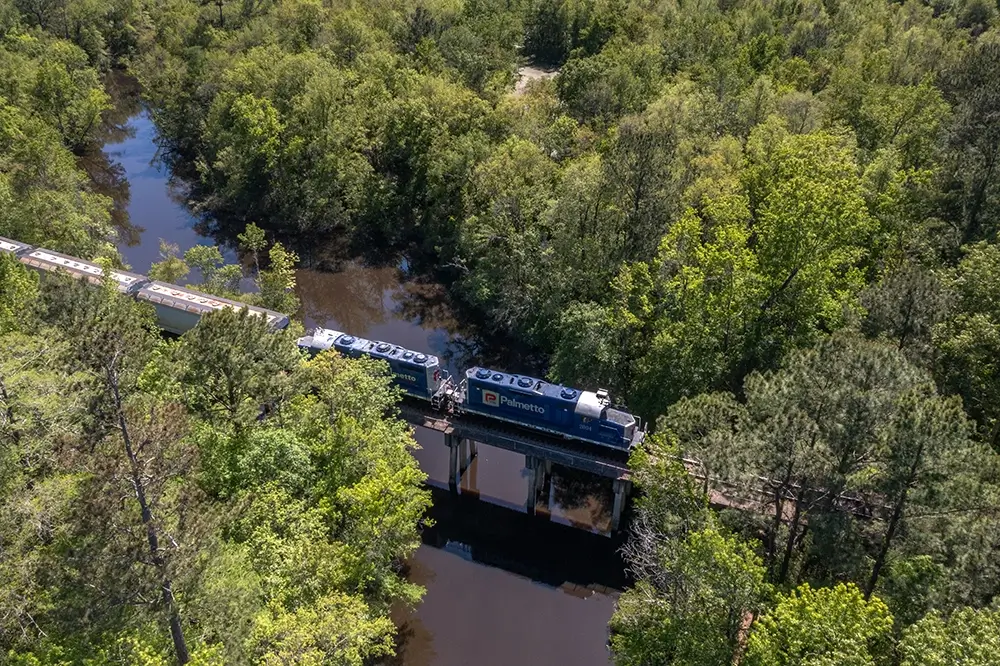
Rail plays a critical role in moving products across South Carolina and beyond. Approximately 70 million tons of freight travel through the state’s rail system, which includes nearly 2,300 miles of track.
Businesses are served by two Class I railroads, CSX Transportation and Norfolk Southern, along with nine independent short lines. Palmetto Railways also operates three common carrier railroads: the Port Utilities Commission of Charleston, Port Terminal Railroad and East Cooper and Berkeley Railroad.
Together, these connections give companies flexible access to ports, production centers and markets throughout the country.
Convenient airports
South Carolina’s six commercial service airports provide convenient passenger and cargo connections throughout the state. They include Charleston International Airport, Columbia Metropolitan Airport, Florence Regional Airport, Greenville-Spartanburg International Airport, Hilton Head Island Airport and Myrtle Beach International Airport. Columbia and Greenville-Spartanburg also serve as significant cargo hubs.
For additional domestic and international connectivity, Charlotte Douglas International Airport, Hartsfield-Jackson Atlanta International Airport and Savannah/Hilton Head International Airport are within easy reach of South Carolina markets.
Businesses can also access a network of regional and general aviation airports across the state.


Broadband access statewide
Reliable broadband is essential to modern business operations. Since 2021, combined federal, state and private investments have expanded high-speed internet access to more than 200,000 locations across South Carolina. More than $551 million in federal BEAD funding will support continued expansion, helping businesses connect with customers, employees and markets across the state.
Whether locating in a major metropolitan area or a rural community, companies benefit from broadband infrastructure designed to support growth, innovation and reliable day-to-day operations.

Find a location that keeps you connected
Explore investment-ready properties across South Carolina and filter by rail access, airport proximity, available utilities, workforce characteristics and other critical business needs.
"Charleston's strong port coupled with its strengthening profile in alternative energy gave us complete confidence in our decision to come here."
Rudiger Unverzagt, CEO, IMO USA
Stay current on business & innovation in SC
Subscribe to our newsletter